A few fallen leaves, some paper, and a crayon can be enough for a lovely afternoon. Fall art does not need a perfect sample to copy or a long shopping list. It can begin with something a child notices.
These invitations work at home or in a classroom. Choose one, put out a small set of materials, and let the finished pieces look different. The point is to give children somewhere to take an idea.
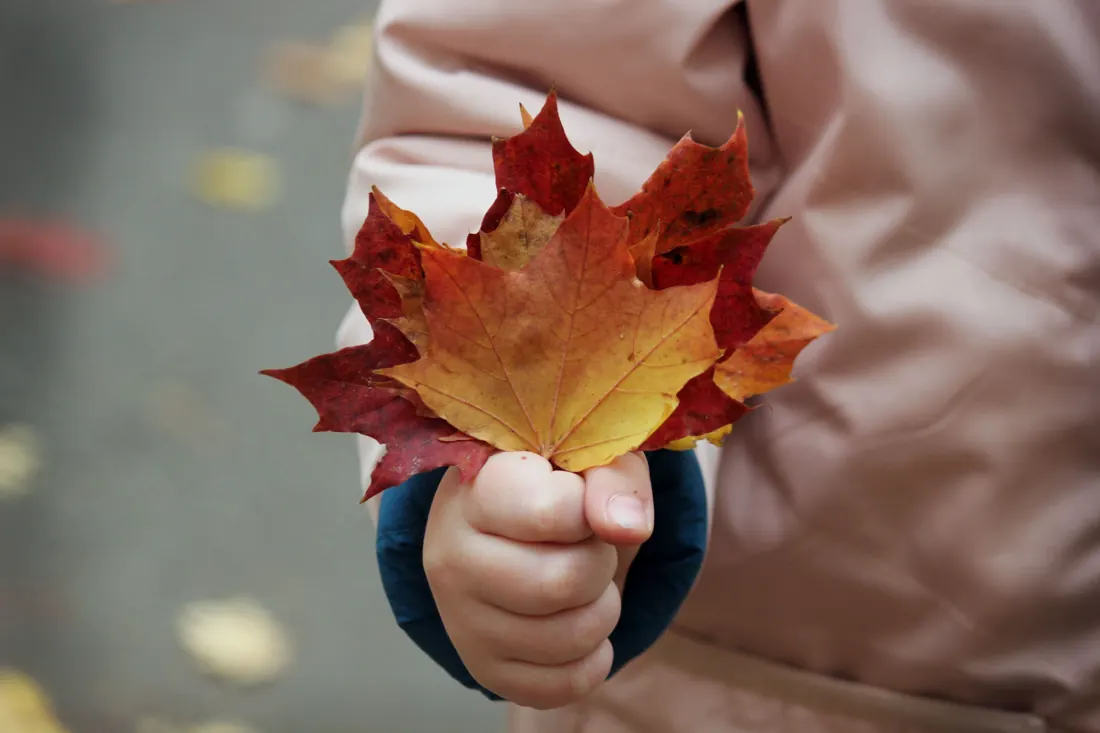
1. Discover the lines inside a leaf
Place a fallen leaf on a hard surface with its raised veins facing up. Cover it with paper. Use the side of an unwrapped crayon and gentle pressure to reveal its shape. Try a second leaf and compare the marks.
If the rubbing is faint, check the leaf’s position and try another crayon. A leaf with a distinct texture is often easier to explore than one that has dried into brittle pieces. Ask, “Which lines surprised you?” rather than judging how neat the picture looks.
2. Turn a leaf shape into something unexpected
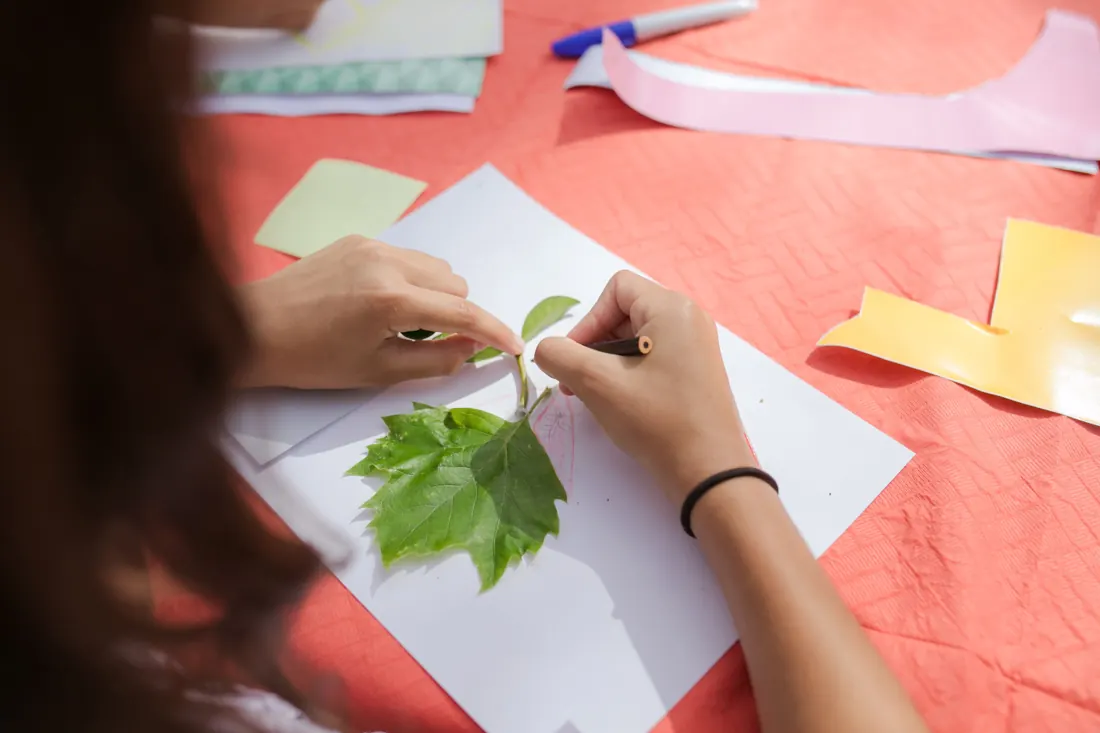
Trace a leaf or begin with a rubbing. Invite the child to add details until it becomes something new. A long shape might suggest a wing, a boat, a creature, or an idea an adult would never have predicted.
Offer possibilities only if the child wants help starting. There is no need for everyone to make the same animal. Children who prefer an abstract design can work with repeating shapes, lines, and color instead.
3. Make a small autumn color collection
Look for colors in a yard, along a walkway, or through a window. Use crayons or paint to make a few patches of the colors the child actually sees. Give them names together: sidewalk gray, late-afternoon gold, or the green that has not changed yet.
Fall does not look identical everywhere. If the trees are still green, that observation belongs in the artwork. Children do not need to replace their surroundings with an orange-and-red picture of someone else’s season.
4. Arrange a picture that can change
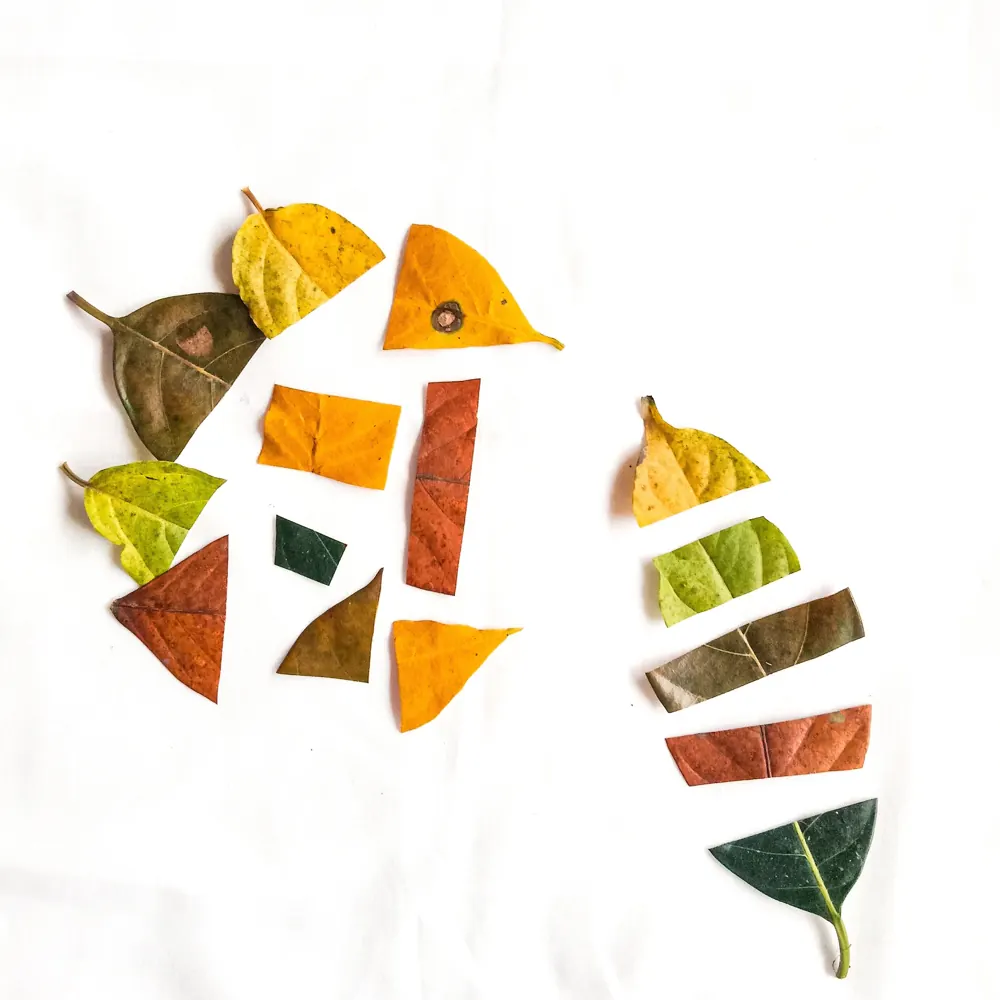
Set fallen leaves on paper and move them into an arrangement before attaching anything. Try a crowded corner, a winding path, or a shape with a large open space around it. Take a photograph if the child wants to keep a version without gluing it down.
This makes revision easy. A child can try an idea, change it, and try another without feeling that the first choice has used up the page.
5. Tell the story of a leaf
Imagine where a leaf might travel after leaving its branch. Draw one moment from its journey. An adult can write a child’s spoken caption, or the child can leave the picture without words. Older learners might add a sequence of three small scenes.
Keep the invitation manageable
Use familiar materials and collect only where it is permitted. Fallen leaves are enough; living plants can stay intact. If going outside is not an option, try a leaf already available, a photograph, or an imagined shape. A crayon and plain paper still count as an art setup.
In a classroom, offer a few leaves at each table and model how to hold the paper still. At home, sit alongside the child if that feels welcome. Help with the materials while leaving the artistic choices to the maker.
Try the companion activity
A Little Leaf Magic is available in the Free Resources’s Art & Creativity collection.