A story does not have to end when the book closes. A child may want to draw the place they imagined, design an object a character might carry, or invent what happens beyond the edge of a scene.
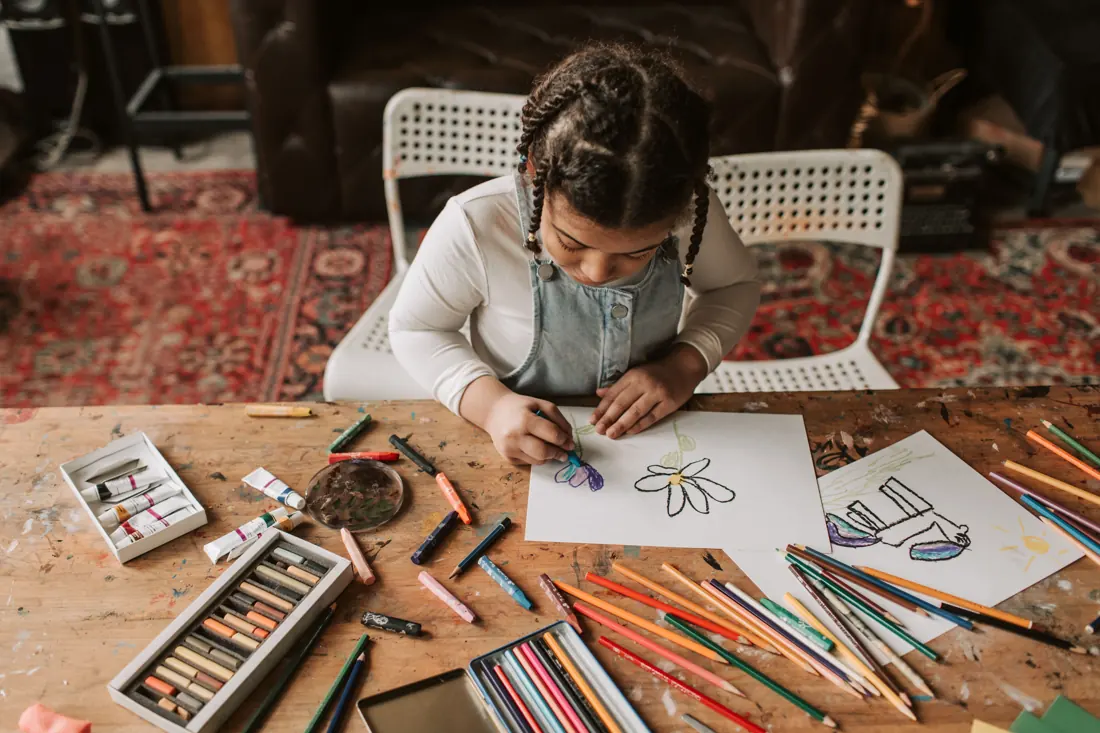
Book-inspired art can be a way to stay with a story without turning every enjoyable chapter into a written assignment. Offer one invitation and let the child decide what to make of it.
Start with a moment that stayed
Ask, “Which place or moment would you like to spend more time with?” It might be a room, a path, a garden, or a small object mentioned only once. The child’s choice does not have to match the adult’s favorite scene.
If choosing feels difficult, offer two possibilities from the book. A younger listener can point to a page or describe an image aloud. An older reader may want to return to a passage before beginning.
Give the art a clear purpose
Decide together whether this is an illustration of the text or an imagined extension. For an illustration, look for details the author gives. For an extension, name what is invented so the child can enjoy adding possibilities without confusing them with events in the book.
You might say, “The story tells us about the gate. We are imagining another part of the garden.” Both kinds of art can be worthwhile; the distinction makes the invitation easier to understand.
Choose one of four ways in
Build a setting. Draw a place and add three details that make it recognizable. An open-ended version can show a place the author never fully describes.
Design an object. Imagine a key, a pocket collection, a map, or a piece of furniture that would fit the character. Ask what makes the choice belong in this story.
Change the viewpoint. Show a familiar scene from the doorway, beside a small animal, or through a window. Children can explore the composition without needing realistic perspective.
Continue a moment. Draw what might happen just after a scene. Introduce it as an invented possibility, then let the child explain it if they wish.
Try a garden gate invitation
Our free page begins with an original ink drawing of a gate and a mostly open space beyond it. Children can add a setting, something to discover, and a clue about who belongs there.
It pairs naturally with The Secret Garden, but it also works with another book or a completely new story. An imagined scene need not recreate an existing illustrator’s picture. Invite children to picture the place for themselves.
Keep the materials flexible
Pencils, crayons, torn paper, or a combination can all work. Children who dislike drawing people can focus on the setting or an object. A child who finds writing tiring can tell the story aloud while an adult listens or takes a short dictated caption.
In a mixed-age group, use the same book but offer different starting points. One child may add flowers and a creature; another may design a setting with details connected to a passage. The younger child’s work does not need to imitate the older child’s plan.
Let the child decide what to share
Ask before displaying the work. A sketch can stay unfinished, and a private drawing can remain private. If the child wants to talk, try “Which detail would you like me to notice?” The artwork can be a conversation without becoming a test.
Try the companion activity
Beyond the Garden Gate is available in the Free Resources’s Art & Creativity collection.